
In This Article

If you are planning a career as an aircraft mechanic, you may be comparing an accelerated A&P prep course with traditional aviation maintenance training. Both options can help you prepare for an FAA Airframe and Powerplant certificate, but they serve different types of students.
The right choice depends on your current experience, career goals, schedule, and eligibility to take the FAA exams.
For someone new to aircraft maintenance, a traditional FAA-certificated Aviation Maintenance Technician School may provide the foundation you need. For an experienced military maintainer or aviation professional, an A&P prep course may be a faster way to organize your knowledge and prepare for testing.
What Is an A&P Prep Course?
An A&P prep course is an intensive review program designed to help eligible applicants prepare for the FAA mechanic certification exams.
The FAA mechanic certification process includes:
- The General written exam
- The Airframe written exam
- The Powerplant written exam
- The oral examination
- The practical examination
An A&P prep course focuses on the knowledge, skills, and test preparation needed for these exams. It does not replace the FAA's eligibility requirements.
Before enrolling, you typically need to qualify through one of the FAA-approved pathways:
- Graduate from an FAA-certificated Aviation Maintenance Technician School, commonly called a Part 147 school.
- Document enough practical aircraft maintenance experience through military or civilian work.
The FAA explains its experience requirements and confirms that A&P refresher and prep courses can help qualified applicants prepare for the written, oral, and practical tests.
At Matta Aviation Services, the accelerated A&P Prep Course is held at Freeman Field Airport in Junction City, Kansas. The program is designed to cover all three written exams along with oral and practical preparation in a focused 10–12 day schedule.
What Is Traditional Aviation Maintenance Training?
Traditional aviation maintenance training usually refers to completing a full program at an FAA-certificated Aviation Maintenance Technician School.
These schools operate under 14 CFR Part 147 and provide structured instruction in aircraft maintenance theory and practical skills. Depending on the program, students may pursue Airframe, Powerplant, or combined A&P training.
According to the FAA's AMTS guidance, a Part 147 school teaches students the knowledge and skills needed for careers in the aviation maintenance industry. After completing the applicable curriculum, graduates may use their school documentation to establish eligibility for the mechanic certification exams, assuming they meet all other FAA requirements.
Most traditional programs take approximately 18 to 24 months, depending on the school, schedule, and ratings pursued.
This path is often best for students who:
- Have little or no aircraft maintenance experience
- Want a complete, structured education
- Prefer regular classroom and lab instruction
- Need to build foundational knowledge before testing
- Want time to practice maintenance tasks under supervision
Traditional training can provide a strong starting point. However, it may not be the most efficient option for someone who already has years of hands-on aircraft maintenance experience.
A&P Prep Course vs. Traditional Training: Key Differences
| Factor | A&P Prep Course | Traditional Aviation Maintenance Training |
|---|---|---|
| Primary purpose | Exam preparation and focused review | Complete academic and practical training |
| Typical length | About 10–12 days at Matta Aviation Services | Approximately 18–24 months, depending on the school |
| Best for | Experienced maintainers who already meet FAA eligibility requirements | New or developing aircraft maintenance students |
| FAA eligibility | Does not replace required experience or Part 147 graduation | School completion may establish eligibility to test |
| Learning style | Intensive, fast-paced, and exam-focused | Structured, progressive, and comprehensive |
| Schedule | Short time away from work or military duties | Long-term attendance commitment |
| Class environment | Small, focused groups with individualized support | Varies by school and program |
| Practical support | Oral and practical exam preparation | Hands-on labs throughout the curriculum |
The most important difference is this: an A&P prep course helps you prepare to test, while traditional training helps you build the experience and education required to become test-eligible.
The Experience Path for Military Aviation Maintainers
Military aviation maintainers may already have valuable experience that can count toward FAA mechanic certification requirements.
The FAA recognizes practical aircraft maintenance experience gained through military service. However, military service alone does not automatically authorize you to take the exams. Your experience must be documented and reviewed by the FAA.
In general, applicants need:
- 18 months of practical experience for one rating, either Airframe or Powerplant
- 30 months of practical experience involving both areas for an A&P certificate
The FAA evaluates whether your experience involved actual maintenance work with the procedures, tools, materials, equipment, and practices used to construct, maintain, or alter aircraft or aircraft engines.
Potential documentation may include:
- DD Form 214
- Military training and qualification records
- Maintenance records
- Specialty or occupational records
- Letters from supervisors or maintenance officers
- Evidence of additional qualifications
- Records showing the aircraft or engines worked on
- Civilian maintenance logs or employer statements
You should contact your local FAA Flight Standards District Office before making assumptions about your eligibility. The FAA inspector will determine whether your documentation supports the ratings you are seeking.
Matta Aviation Services also provides guidance on the FAA Form 8610-2 process, which is an important step for many applicants using the experience pathway.
Who Should Choose a Traditional Aviation Maintenance School?
A traditional aviation maintenance program may be the better choice if you are starting from the beginning.
For example, you may benefit from Part 147 training if you:
- Have never worked on aircraft
- Need supervised practical experience
- Want to learn aircraft systems in a step-by-step format
- Prefer a longer academic schedule
- Need more time to develop confidence with tools and procedures
- Want a broad introduction to aviation maintenance careers
A traditional school can also help students understand the relationship between general maintenance principles and specific aircraft systems. The longer format provides more time for repetition, lab work, instructor feedback, and skill development.
Before selecting a school, confirm that it is FAA-certificated and that its curriculum includes the rating or ratings you want. You can use the FAA's resources to locate an AMTS.
Who Should Choose an A&P Prep Course?
An A&P prep course may be the right choice if you already have practical experience and are ready to prepare for the exams.
This option is commonly a good fit for:
- Military aviation maintenance personnel
- Former service members transitioning to civilian aviation
- Experienced aircraft technicians
- Civilian maintenance professionals
- Applicants who have completed a Part 147 program but want additional exam preparation
- Students who need a concentrated review before testing
An accelerated program can reduce the amount of time you need to spend away from work, family, or military responsibilities. It can also give you a clear study schedule instead of requiring you to prepare independently.
Matta Aviation Services limits A&P prep classes to a small number of students so instructors can provide individual help. The course includes daily quizzes, practice exams, coaching, and preparation for the written, oral, and practical exams. The team also assists with coordinating testing with Designated Mechanic Examiners.
What to Expect from an Accelerated A&P Prep Course
An accelerated course is not easy. It condenses a large amount of technical material into a short period, so students must be prepared to study consistently.
At Matta Aviation Services, students work through the three written subject areas and prepare for oral and practical testing. The course includes:
- Focused instruction in General, Airframe, and Powerplant subjects
- Daily study assignments
- Practice tests and knowledge checks
- Instructor feedback
- Oral examination preparation
- Practical examination preparation
- DME scheduling assistance
- Small-class instruction
- Optional lodging and transportation support
The course is currently offered at Freeman Field Airport in Junction City, Kansas. Optional student lodging is available based on space, and students traveling to Kansas can receive help with local transportation arrangements.
Which Path Is Faster?
For a student without qualifying aircraft maintenance experience, attending a traditional aviation maintenance school is usually the more direct path to becoming eligible for the exams.
For an experienced military or civilian maintainer, the experience pathway followed by an A&P prep course may be significantly faster. Instead of repeating years of training, you can focus on documenting your experience, receiving FAA approval, and preparing for the tests.
The key is to complete the steps in the correct order:
- Review your military or civilian maintenance experience.
- Gather documentation supporting your work history.
- Contact your local FAA office for an experience evaluation.
- Complete the required FAA paperwork, including Form 8610-2 when applicable.
- Confirm your eligibility to test.
- Enroll in an A&P prep course if you want structured preparation.
- Complete the written, oral, and practical exams.
Do not enroll in a prep course simply because you have worked around aircraft. The FAA requires documented, practical maintenance experience, and the final eligibility decision belongs to the FAA.
How to Decide Which Option Is Right for You
Ask yourself these questions:
- Have I performed hands-on aircraft maintenance?
- Can I document the work I have completed?
- Do I need one rating or both Airframe and Powerplant?
- Am I already eligible to take the FAA exams?
- Do I learn best through an intensive schedule or a longer program?
- How much time can I take away from work or military duties?
- Do I need foundational maintenance training?
- Would a short, focused course help me prepare more effectively?
If you are new to the industry, traditional aviation maintenance training may offer the structure and practical foundation you need.
If you already have substantial experience, an A&P prep course may help you move toward certification without repeating training you have already completed.

Start Your A&P Certification Plan
There is no single route that works for every aspiring aircraft mechanic. Traditional Part 147 training and the experience-plus-prep-course pathway are both valuable, but they are designed for different starting points.
The best first step is to understand your FAA eligibility before choosing a program. Experienced military maintainers should organize their records and contact the FAA. New students should research FAA-certificated maintenance schools and compare their programs, schedules, costs, and facilities.
If you are already eligible to test and want an intensive review program, learn more about the Matta Aviation Services accelerated FAA A&P Prep Course. When you are ready, reserve your seat and begin preparing for your next aviation career step.
FAA certification requirements can change, and individual circumstances vary. Always confirm your eligibility and documentation requirements with the FAA before enrolling or scheduling an examination.
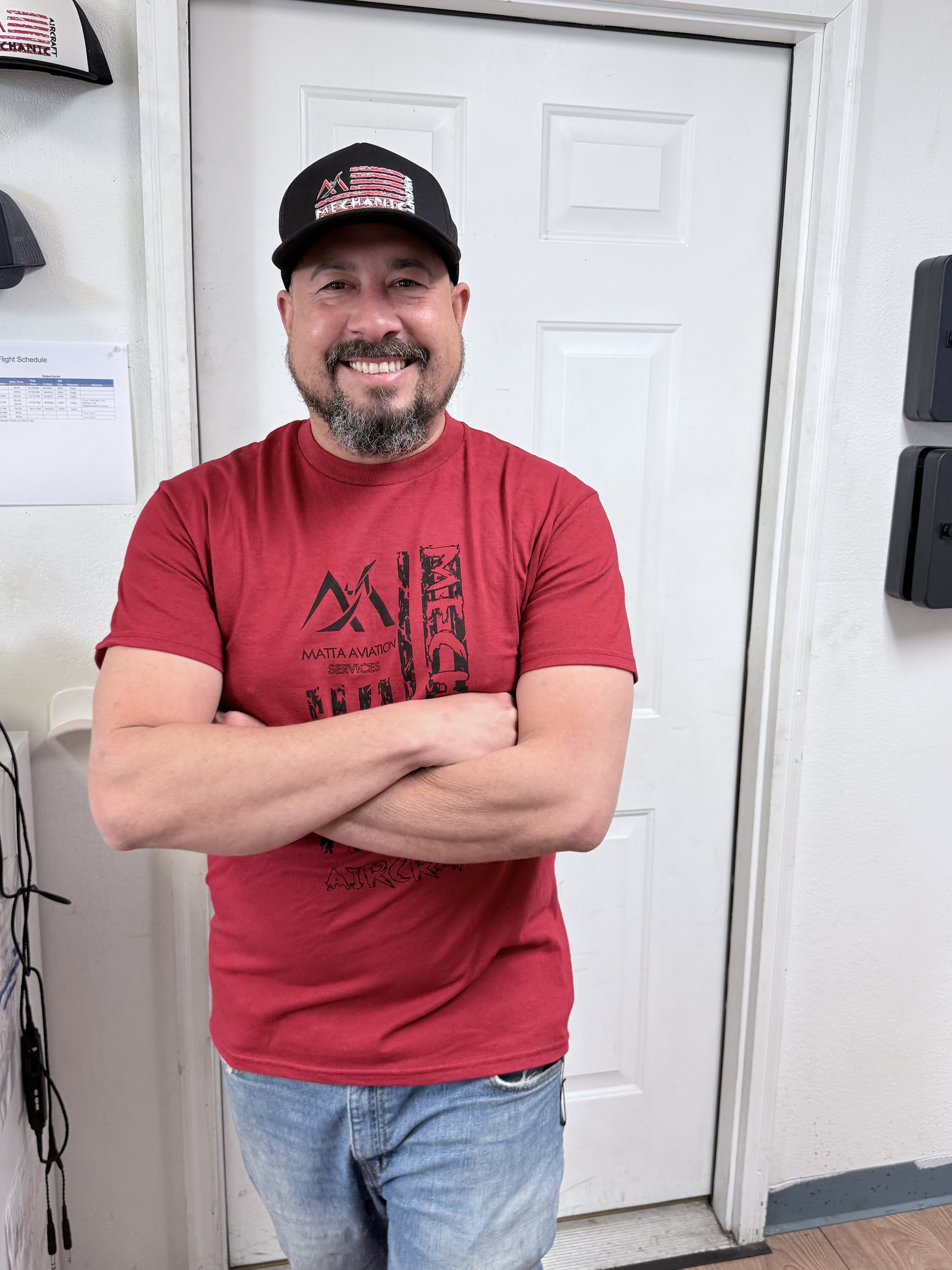
About the Author
Eddie Matta
FAA A&P IA · CFI · CFII · MEI
Eddie Matta is the owner of Matta Aviation Services at Freeman Field Airport (3JC) in Junction City, Kansas. He holds FAA Airframe and Powerplant (A&P) and Inspection Authorization (IA) certificates and is a CFI, CFII, MEI, AGI, and IGI. He served in the U.S. Army and brings both military and civilian aviation experience to every lesson and inspection.
Ready to Fly?
Book a Discovery Flight
Experience the cockpit at Freeman Field Airport in Junction City, KS. Hands-on flying with a CFI. No experience required.
Start Training
Flight Training Programs
Private Pilot through CFI. Structured training with an experienced instructor serving Junction City, Fort Riley, and Manhattan, KS.