
In This Article

Preparing for an FAA mechanic certificate is not simply a matter of memorizing hundreds of answers. Memorization may help you recognize terminology or recall a basic definition, but it will not carry you through every follow-up question on the FAA oral and practical examination.
A strong A&P mechanic must be able to explain how a system works, identify what could fail, understand why a procedure exists, and make a safe maintenance decision. That is the difference between knowing an answer and understanding the aircraft.
The FAA Aviation Mechanic Airman Certification Standards (ACS) are built around knowledge, risk management, and practical skills. During the oral and practical, a Designated Mechanic Examiner (DME) may ask you to explain your reasoning, connect one system to another, or describe what you would do when conditions change.
That is why successful A&P students should stop studying only for recall and start studying for understanding.
Why Memorization Fails During the FAA Oral Exam
Memorized answers often sound correct until the examiner asks a second question.
A student may remember that a magneto produces ignition, for example. But can the student explain:
- Why a magneto can produce a spark without aircraft battery power?
- How the ignition switch shuts the magneto down?
- What a P-lead does?
- Why a broken P-lead can create a “hot” magneto?
- Why a hot magneto makes propeller movement dangerous?
Those follow-up questions test whether the student understands the system or has only memorized a sentence.
The same issue appears throughout the General, Airframe, and Powerplant subjects. You may remember the name of a component, its location, or a limitation. But if you cannot explain the component's purpose, what happens when it fails, and how you would verify the condition using approved data, the answer is incomplete.
Memorization is not useless. Every mechanic must learn terminology, specifications, inspection requirements, and procedures. The problem is relying on memorization without understanding the cause-and-effect relationships behind the information.
Understanding the System: Cause, Effect, and Failure Modes
Systems understanding means tracing a process from beginning to end.
For an engine starting system, that might mean explaining how the controls, starter, magneto, impulse coupling, spark plugs, fuel, and combustion process work together. For an electrical system, it means understanding how power is generated, controlled, distributed, protected, and returned through the aircraft's electrical path.
A useful way to study any system is to ask four questions:
- What is the system designed to do?
- How does it accomplish that purpose?
- What can fail, and what symptoms would I see?
- What would make the aircraft unsafe or unairworthy?
This approach prepares you for both the examination and real maintenance work. It also makes troubleshooting more logical. Instead of replacing parts based on guesses, you can follow the system, isolate the fault, and verify the repair.
Hand Propping: Understand the Procedure, Not Just the Steps
Hand propping is an excellent example of why understanding matters.
A student may memorize a list of hand-propping steps, but a DME may ask why each step exists. The correct answer requires knowledge of ignition-system operation, aircraft control, human factors, and risk management.
A magneto produces ignition energy when it rotates. It does not depend on the aircraft battery in the same way a battery-powered ignition system does. The ignition switch normally stops ignition by grounding the magneto through the P-lead. If the P-lead is broken, disconnected, or improperly grounded, the magneto may remain capable of producing a spark even when the switch appears to be OFF.
That condition is commonly described as a hot magneto. It means the propeller must be treated as live. Moving the propeller could cause the engine to start unexpectedly.
The impulse coupling is another example. At low cranking speed, the coupling helps provide a stronger spark and retards ignition timing for starting. Once the engine reaches operating speed, the coupling disengages and the magneto operates at its normal timing. The exact configuration depends on the engine and magneto installation, so students must learn to consult the applicable maintenance information rather than rely on assumptions.
Understanding these relationships explains why hand-propping requires strict communication, aircraft security, proper control positions, and qualified personnel. It also explains why a suspected hot magneto is not a minor inconvenience. It is a serious safety defect that must be corrected before the aircraft is returned to service.
Hand-propping should never be attempted casually or based on a memorized checklist alone. Follow the aircraft manufacturer's procedures, use qualified supervision, and stop if the aircraft, personnel, or communication conditions are not safe.

Taxiing and Engine Run-Up Require the Same Mindset
Taxiing and engine run-up questions also reveal whether an A&P student understands risk.
A memorized answer might mention checking the brakes and moving slowly. A mechanic who understands the situation will also consider:
- Whether the aircraft is properly configured after maintenance
- Whether panels, cowlings, inspection covers, and doors are secure
- Whether tools, rags, and equipment have been removed
- Whether the brakes and steering respond normally
- Where personnel are positioned in relation to the propeller arc
- Whether the aircraft has enough clearance from buildings and other aircraft
- What the plan is if an engine indication or control response is abnormal
During an engine run-up, the mechanic must understand what the instruments and system checks are telling them. A magneto check is not just an item to complete. It provides information about ignition-system operation. A propeller-governor check evaluates a different part of the powerplant system. Oil pressure, temperature, fuel flow, vibration, and unusual sounds all provide clues about the engine's condition.
If a fuel or oil leak appears during a run-up, the correct response is not to continue gathering data while hoping the problem resolves. The engine should be reduced or shut down as appropriate, the area secured, and the discrepancy investigated using applicable procedures and approved maintenance data.
The important lesson is that procedures exist to control risk and gather reliable information. Understanding the purpose behind each step helps you recognize when conditions are no longer acceptable.

How to Study for Understanding
You can change the way you study without abandoning your existing books, notes, or practice tests.
Teach the subject back
After studying a system, explain it out loud as if you were teaching a new student. Avoid reading directly from your notes. If you cannot explain the system in plain language, identify the gap and review it.
Trace systems end to end
Follow the flow of energy, air, fuel, oil, hydraulic fluid, control movement, or information through the aircraft. Ask what starts the process, what controls it, and what confirms that it is working.
Ask, “What happens if?”
For every major component, ask what happens if it fails open, fails closed, becomes disconnected, loses power, leaks, or is installed incorrectly. Then consider the symptoms, inspection method, and airworthiness impact.
Use the aircraft and hangar as classrooms
Hands-on exposure makes abstract information easier to retain. Look at the aircraft. Identify components. Follow lines and control cables. Observe how an instructor makes a maintenance decision. Real equipment gives context to the words in a study guide.
Practice with other students
Study groups are especially useful when students explain systems to each other. One person can ask, “Why?” while another explains the answer. That practice closely resembles the reasoning required during the oral examination.

How the MAS A&P Prep Course Builds Understanding
The Matta Aviation Services accelerated A&P Prep Course in Junction City, Kansas, is designed to help qualified military and civilian aviation professionals prepare for the FAA mechanic certificate examinations through structured instruction and practical application.
The course uses the aircraft, ramp, and hangar as part of the classroom. Students work through General, Airframe, and Powerplant subjects while receiving instructor coaching on how to explain systems, recognize hazards, and connect theory to maintenance decisions.
The accelerated format is typically completed in 10–12 days and includes:
- Hands-on ramp and hangar training
- Small-class instruction
- Daily practice exams
- Oral and practical examination preparation
- Instructor coaching and review
- Assistance with DME scheduling
- Guidance with the FAA Form 8610-2 authorization process
MAS does not treat preparation as a simple exercise in answer repetition. The objective is to help students develop the knowledge and confidence to explain what they know, apply it safely, and continue learning as working aviation professionals.
For students researching how to get an A&P license, an accelerated prep course can provide focused preparation after the applicant has obtained the required eligibility and FAA authorization. Individual experience, military documentation, and FAA determinations vary, so applicants should review the applicable requirements and discuss their situation with qualified personnel.
Build the Mechanic You Need to Become
The FAA oral and practical examination is an important milestone, but it is not the end goal. The real goal is becoming a mechanic who can inspect intelligently, troubleshoot methodically, perform work safely, and make defensible airworthiness decisions.
Memorization may help you start studying. Understanding is what helps you finish strong.
If you are looking for an aircraft mechanic school, aviation maintenance training, or an accelerated A&P Prep Course built around practical knowledge, contact Matta Aviation Services to discuss your next step.
Learn more about the MAS Accelerated A&P Prep Course, review FAA Form 8610-2 guidance, or call 785-208-4610. You can also email info@mattaaviationservices.com.
For official information about mechanic certificate testing, review the FAA's mechanic test requirements and Aviation Mechanic Airman Certification Standards.
Frequently Asked Questions
Does the FAA oral exam require more than memorizing answers?
Yes. Applicants must demonstrate the knowledge and understanding identified in the applicable FAA standards. A DME may ask follow-up questions to evaluate how well you understand system operation, risk, troubleshooting, and maintenance decisions.
Why is a hot magneto dangerous?
A hot magneto is not properly grounded and may produce a spark even when the ignition switch is in the OFF position. If the propeller is moved, the engine may start unexpectedly. The propeller should always be treated as live.
How can I study systems instead of memorizing?
Explain systems out loud, trace them from input to output, ask what happens when components fail, use the aircraft as a learning tool, and practice answering “why” questions with a study partner or instructor.
Does the MAS course help with FAA Form 8610-2?
Yes. Matta Aviation Services assists eligible applicants with understanding the FAA Form 8610-2 authorization process as part of its A&P certification preparation support. Individual authorization decisions remain subject to FAA requirements and determination.
About the Author
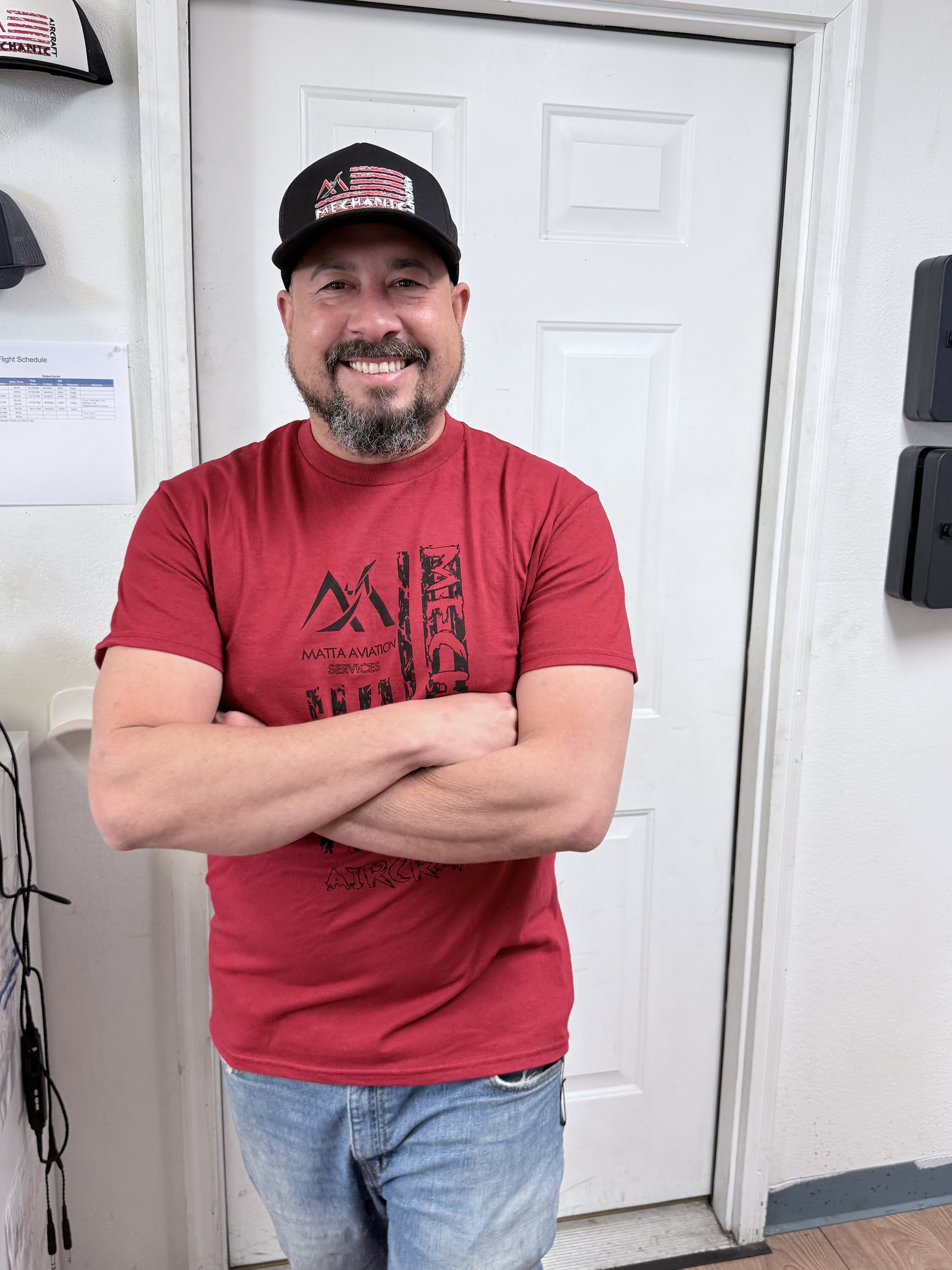
Eddie Matta
FAA A&P IA · CFI · CFII · MEI
Eddie Matta is the owner of Matta Aviation Services at Freeman Field Airport (3JC) in Junction City, Kansas. He holds FAA Airframe and Powerplant (A&P) and Inspection Authorization (IA) certificates and is a CFI, CFII, MEI, AGI, and IGI. He served in the U.S. Army and brings both military and civilian aviation experience to every lesson and inspection.
Ready to Fly?
Book a Discovery Flight
Experience the cockpit at Freeman Field Airport in Junction City, KS. Hands-on flying with a CFI. No experience required.
Start Training
Flight Training Programs
Private Pilot through CFI. Structured training with an experienced instructor serving Junction City, Fort Riley, and Manhattan, KS.